
Introduction to Lake Mutanda
Where is Lake Mutanda?
Lake Mutanda is a small, freshwater lake in the far southwest of Uganda, close to Bwindi Impenetrable Forest and Mgahinga Gorilla National Park. It is drained by the Rutshuru River, flowing northward to Lake Edward.
Lake Mutanda is a 30-minute drive from the centre of Kisoro.
With an altitude of 1,800m, it is a great place to hike, and it offers breath-taking views of The Virunga Mountains.
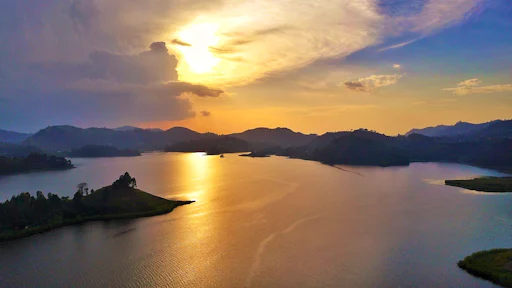
Volcanoes around Lake Mutanda
Which volcanoes surround Lake Mutanda?
Three extinct volcanoes are within viewing range of the lake: Mount Muhabura, Mount Sabyinyo, and Mount Gahinga.
If you are a keen hiker, it is worth packing a pair of sturdy walking boots, as you will not want to miss the stunning views that these walks offer.
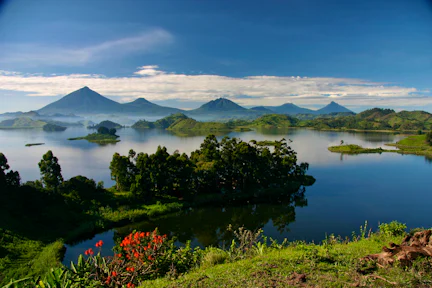
Hiking at Lake Mutanda
Mount Muhabura, ‘The Guide’
Mount Muhabura means ‘the guide’ in Kinyarwanda, the official language of Rwanda. With an elevation of 4,127m, Mount Muhabura is the third highest of the Virunga Mountains.
This steep hike, with a gradual incline on rocky surfaces, typically takes a whole day.
Although the hike is physically demanding, it provides breath-taking views of Lake Edward, Bwindi, and the peak of the Rwenzori Mountains.
Remember to pack a camera to capture the astonishing panoramic view. You will reflect on it for years to come.
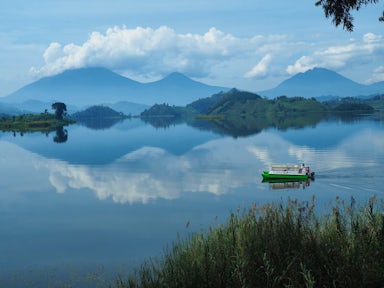
Mount Gahinga
With an elevation of 3,473m, Mount Gahinga is smaller than Mount Muhabura and Mount Sabyinyo. In Kinyarwanda, ‘Gahinga’ means ‘a pile of stones’.
The hike is gentler, and it is suitable for less experienced hikers. On the day of your hike, you must buy a hiking permit ($75) and attend a health and safety briefing.
Bamboo thrives on the slopes of Mount Gahinga, and you will discover bamboo forests that house a plethora of wildlife, from the endangered mountain gorilla to the regal sunbird.
The scenic hike begins at 07:00 along a gentle incline, and it will take around 6 hours.

Mount Gahinga is in the Virunga Mountains.
Mount Sabyinyo ‘Old Man’s Teeth’
Mount Sabyinyo is known locally as ‘Old Man’s Teeth’, due to the summit’s resemblance of worn teeth. Mount Sabyinyo has an elevation of 3,669m, and it is the oldest volcano of the range.
There are multiple hiking routes of varying degrees of difficulty. It includes three peaks, the first being the Sabyinyo Gorge, which is home to thick vegetation. This is a popular destination for bird watching but keep an eye out for golden monkeys!
The second peak involves walking between Rwanda and Uganda.
The third peak is challenging. You will be scrambling with your hands, as well as ladders. However, if you are up for the challenge, you will be in Rwanda, Uganda, and Congo all at the same time.
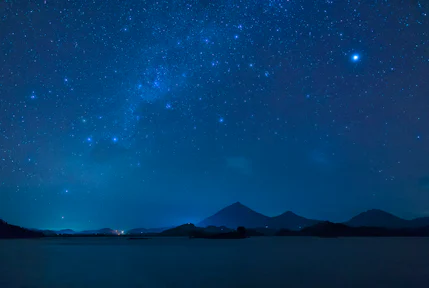
The starlight by the shores of Lake Mutanda.
Activities at Lake Mutanda
Garama Cave visit
Hiking is not the only attraction at Lake Mutanda. There is plenty to do if you aren’t interested in hiking.
Visiting the Garama Cave is a great way to develop your understanding of the local cultures. It is a tourism trail, created as a collaboration between the Uganda Wildlife Authority (UWA) and The United Organisation for Batwa Development in Uganda.
The trail is designed to support the Batwa, who inhabited the caves for many years before being recently resettled. Batwa guides will give you a tour of the 340m long cave and give you an insight into their culture and way of life.

Lake Mutanda is a freshwater lake in southwestern Uganda.
Island Tours
Lake Mutanda contains 15 small islands. ‘Mutanda Island’ is inhabited by a clan called ‘Abagesera’. The Abagesera have built a church on the top of the island, where they welcome local worshippers who attend from the mainland.
Travel to the island in a traditional dug-out canoe or a boat. From here, you will be able to view the scenery from a different perspective and meet the locals. To engage with the culture, you can attend community walks, and visit the local church.
Brave adventurers can visit the Punishment Islands which used to house outcasts of the region’s society. It contains skeletal remains and some locals believe that it is haunted.
Even bolder visitors can head to Python Island for a chance to see the resident snakes.
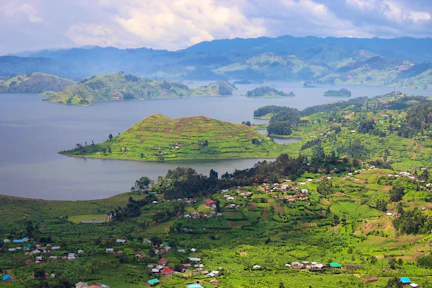
Lake Mutanda contains fifteen islands.
Canoeing
If you want to get off the land and onto the water, canoeing is a great way to discover the lake. This is one of the more relaxing activities, as the water is known for being calm.
Glide through the tranquil waters from island to island. You may even be able to spot some birds and otters.
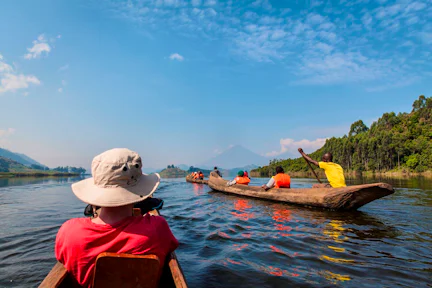
Glide through Mutanda’s tranquil waters from island to island.
Mountain Biking
Adrenaline junkies can spend hours biking on the slopes of the Virunga Mountains.
Feel the wind rushing past your face as you scramble down a steep slope, as gravity pulls you back down the mountains towards the shores of Lake Mutanda, where your lakeside lodge awaits.
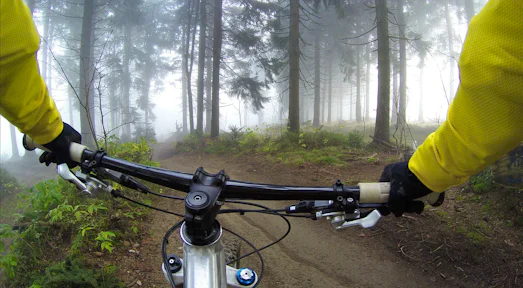
In 2012, the Uganda Wildlife Authority opened mountain biking trails at Mount Elgon.
Wildlife at Lake Mutanda
At Lake Mutanda, you can discover a small range of bird species, from kingfishers to Uganda’s national bird, the grey-crowned crane.
Due to the high elevation, and cold climate, you are more likely to come across pin-tailed whydahs, and sunbirds. But keep an eye out for weaver bird nests!
If you are venturing out on foot, you may spot snakes, chameleons, and a variety of frogs.
Hippos have been seen at Lake Mutanda, but not since 1994. Instead, on the water, you will only come across African clawless otters and fish.
Mgahinga Gorilla National Park and Bwindi Impenetrable National Park are nearby. They both support a range of wildlife.
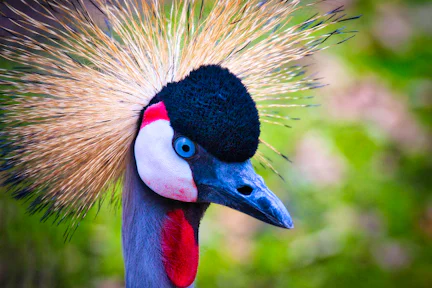
The grey crowned crane is found at Lake Mutanda and QENP.
Mutanda Eco Community Centre
A community-owned eco-lodge on the southern shores of Lake Mutanda. Camping facilities, food, and accommodation are provided.
You can even get involved in their volunteering to support the local community during your stay.
The volunteering experience includes teaching swimming lessons to children, working at the health centres and teaching conservation education at the nearby Chihe Primary School.
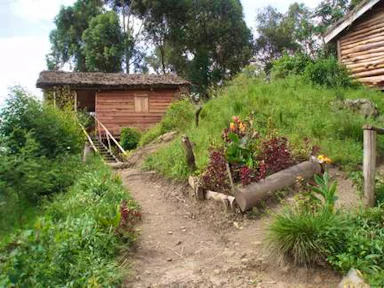
A simple, but comfortable, banda at Mutanda Eco Community Centre.
When is the best time to visit Lake Mutanda?
The best time to visit Lake Mutanda is during the dry seasons of June to September and December to February.
Rainfall is heaviest in late March, April and into May, peaking again in late October and November. Late December, January and February tend to be generally hot and dry, while June, July, August, and September are cooler and mostly dry.
The hiking slopes around Lake Mutanda will be more challenging during the wet seasons. We recommend that you visit during the dry seasons because you can focus on the scenery, not on the slippery hiking trail.
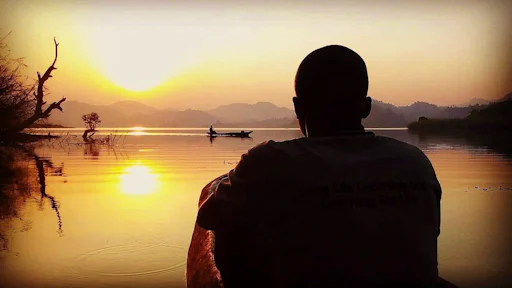
Sunset at Mutanda Lake Resort, Lake Mutanda.