
Watching chimpanzees in one of Africa’s most ancient forests
Chimpanzee trekking in Rwanda / tracking is one of the most exciting and most popular wildlife tours to do in Rwanda (only the gorilla trekking is more popular). It is an exciting and a must do tour for nature lovers because chimpanzees are man’s closest relatives and it is very interesting seeing them up-close and observe how similar they are to humans in their physical appearance, interaction with one another, communication, organization of their community etc… The chimpanzee tour in Rwanda also offers an opportunity to experience such a beautiful African jungle and watch different forest life such as different tree species, monkeys, butterflies, birds, etc…
Chimpanzee trekking in Nyungwe Forest
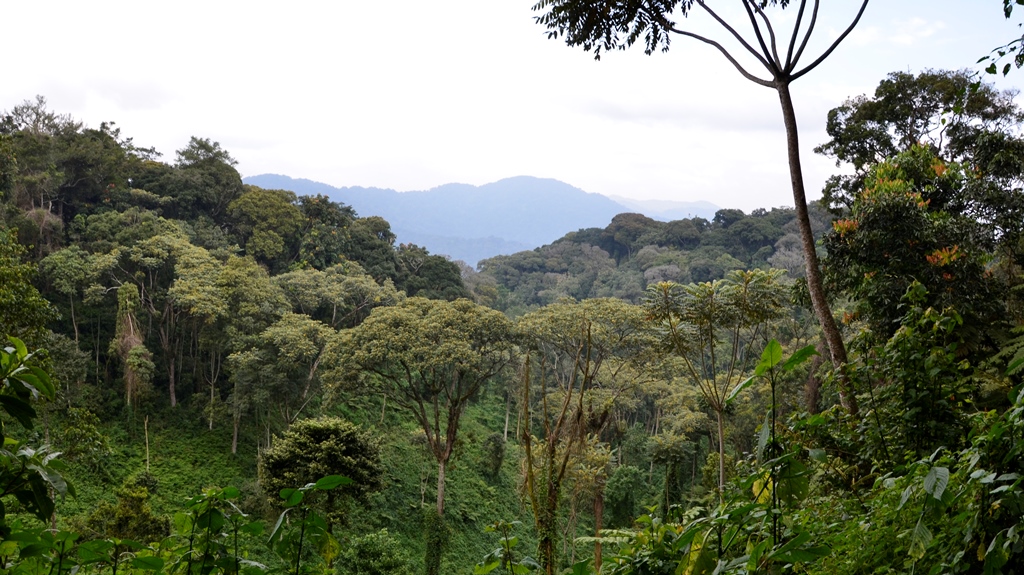
The chimpanzee trekking in Rwanda is done in Nyungwe Forest National Park and not any other place. Nyungwe park which is located about 5 – 6 hours from Kigali in the southwest of the Rwanda, protects an ancient mountain forest that is said to have existed since the ice age thereby protecting a huge biodiversity, with many species found to exist only in this forest.
Nyungwe National Park is especially known for its many primates, having 13 primate species recorded there, and this includes a big population of the chimpanzees – man’s closest relatives. There are more than 500 chimps in Nyungwe National Park thus offering one of the best chances to see chimps in their natural home. Other chimps in Rwanda are found in the Gishwati-Mukura National Park but there is no chimpanzee trekking done there at the moment.
The A – Z of chimpanzee trekking in Rwanda and Nyungwe National Park (all your questions answered)
First of all, is it safe to see the wild chimps?
Yes it is!! To enable trekking to see the wild chimps in their natural home without being attached by the chimpanzees, a community of chimps goes through what is called habituation. Habituation of chimpanzees is the process where trained personnel make continuous visits to wild chimps whose first reaction is to flee or attack, till a time when the chimps realize the visiting humans are not a threat. At this point the chimps will start to tolerate human presence. The habituation of chimps takes several years till when the personnel can confirm the chimps will not feel threatened and will not be a threat when these personnel come along with other visitors, that is, tourists. The chimps can tolerate tourists only if they see the familiar faces of personnel they have been seeing before during the habituation. Hence all chimp trekking is led by park guides who are known to the chimps.
How are the chimps found and what are the chances of finding them in Nyungwe?
Chimpanzees, like humans, live in communities, and there are three communities of chimpanzees in Nyungwe National Park that have been habituated for the chimpanzee tracking tours in Rwanda.
One habituated chimpanzee community (Cyamudongo group) lives in Cyamudongo forest, a small patch of forest located to the east of Nyungwe forest. Cyamudongo forest is part of Nyungwe National Park though physically detached from the larger and main forest. Historically it was a continuous forest. This community has about 30 chimps. Cyamudongo offers the most successful sightings due to the small size of the forest that will be covered even when the chimps move farther.
The second habituated chimpanzee group (Uwinka group) is found in the main Nyungwe forest around Uwinka area (park headquarter) and is bigger with about 60 chimps. However given the magnitude of the forest and terrain it sometimes offers lesser chances of seeing the chimps, compared to the chimp group in Cyamudongo forest that has a smaller number of about 30 chimps but offering the most successful sightings given the small size that can be covered to find the chimps in any part.
The third and newest habituated chimpanzee group (Gisovu group) is also found in the main Nyungwe forest but more remotely located in Gisovu, an area to the north of the park near Kibuye town. Being a newly habituated group it is not yet so used to strangers even when there is a park guide so they may flee when approached or move faster. With time they will become more comfortable.
The park will always assess the chances of seeing the chimps before going out to trek in Nyungwe National Park so that tourists have almost no chance of missing them.
From where and at what time does the chimpanzee trekking in Nyungwe park start?
The chimpanzee trekking tours in Nyungwe National Park set off from Gisakura ranger station (for tracking Uwinka and Cyamudongo groups) and from Gisovu near Kibuye (for tracking the Gisovu group). Tourists are expected to report at the ranger station by 4.30am – 5.0am to meet the park guides for briefing and by 5am are transferring to the starting point of the trek into the park. There is only one session to track chimps in Nyungwe which is the early morning session.
NOTE: If you have been allocated the Gisovu chimpanzee group you should stay in Kibuye town as the closest place to transfer to Gisovu. There are lots of hotels in Kibuye, a beautiful lakeside town of Lake Kivu. It is still a long 1 hour drive from Kibuye to Gisovu.
How long does it take to find the chimps and for how long are tourists allowed to see the chimps?
The chimpanzees make new homes (nests) in a different place every day. They have no permanent address in the forest. They will make new nests where they will have ended the day. So the the time taken to find them is unpredictable, also since the chimps are quickly on the move once they wake up. However, there are park trackers who will have gone ahead of the tourist trekking group to find the chimps before they leave their nests, or track them down shortly after they leave their nests. The trackers communicate to the guides of the tourists about the location so the guides will work out the easiest route to find the chimps that are already on the move.
On average it may take about 2 -3 hours of trekking to find the chimpanzees.
After finding the chimpanzees in Nyungwe National Park, tourists are allowed only one hour to be the with the community of the chimps and it is a wonderful opportunity to observe them closely as they go about their lives. Observing the actions and features from the individual chimpanzees, the classes in the community and their leadership structure, one can see why they are called man’s closest relatives which share up to 98.7% DNA with man.
Because a group or community of chimps can cover large territory and the individual chimps or smaller units of the community can become quite distant from each other, to tell each other of their locations, every now and then the chimps communicate by way of deafening screams, loud pant hoots and thunderous slapping of the tree barks and buttresses – it is such a hair rising moment like nothing you have experienced before!
For those that been to gorilla trekking or are planning to, the chimpanzee trekking experience is quite different because the chimps are way more active than the docile or gentle gorillas. The chimps keep running and swinging around in the tree canopies, and so there may be a bit of running after to catch up and sightings may be a bit more sporadic and rushed.
Cost of the Rwanda chimpanzee trekking tour & age limit
The cost of the chimpanzee tracking tour in Nyungwe is = chimpanzee tracking permit + park entry
NOTE: Only persons aged 16 years and above are allowed for the chimpanzee trek
The pricing of the chimpanzee tour in Nyungwe is as follows:
Price of the chimpanzee trekking permit (includes guide)
The cost of the permit for chimpanzee trekking in Rwanda for different types of visitors is as follows:
International Visitor: $150
Foreign Resident in Rwanda/East Africa: $75
Rwanda/East African Citizen: $25
Park entry fees
International Visitor: $100
Foreign Resident in Rwanda/East Africa: $60
African Citizen (other than East Africa): $60
Rwanda/East African Citizen: $10
Therefore, for an international visitor, the chimpanzee tracking tour in Nyungwe costs $150 + $100 = $250
NOTE:
Only 8 tourists are allowed to track each chimpanzee group in the day’s only session in the morning, and therefore since there are three habituated chimp groups only 24 chimp permits are available each day. This is a very limited number of permits considering how many people want to track the chimps. You are advised to book your Rwanda chimp tour well in advance so that your permit is secured.